Sargam Geet (Swarmalika)
सरगम गीत (स्वरमालिका)
In short
A composition set to taal in which the only words are the names of the notes (Sa Re Ga Ma...). It is usually the first composition a student learns in a new raga.
ऐसी तालबद्ध रचना जिसमें गीत के शब्दों के स्थान पर केवल स्वरों के नाम (सा रे ग म...) गाए जाते हैं। किसी नए राग में प्रायः यही पहली रचना सिखाई जाती है।
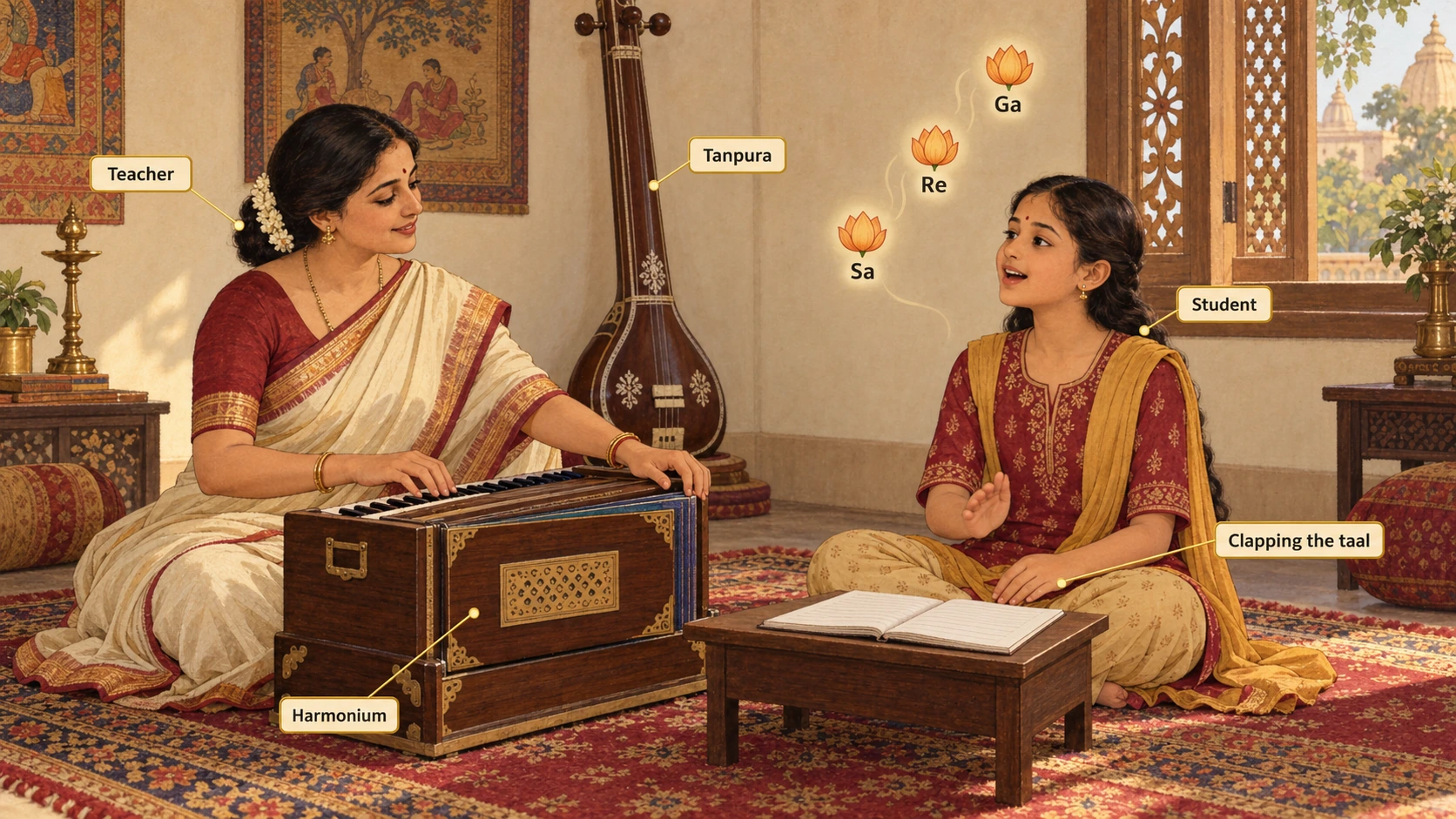
A song made of note names
From level 2A sargam geet, also called swarmalika (स्वरमालिका, "garland of notes"), is a fixed, taal-bound composition whose words are simply the swara names: सा रे ग म प ध नि.
It is usually the first thing you learn in a new raga. Because you sing each note's name as you sing its pitch, the raga's aaroha-avaroha, pakad and important notes go straight into your ear and memory. It is the bridge between the alankars you practise and the bandish with real words.
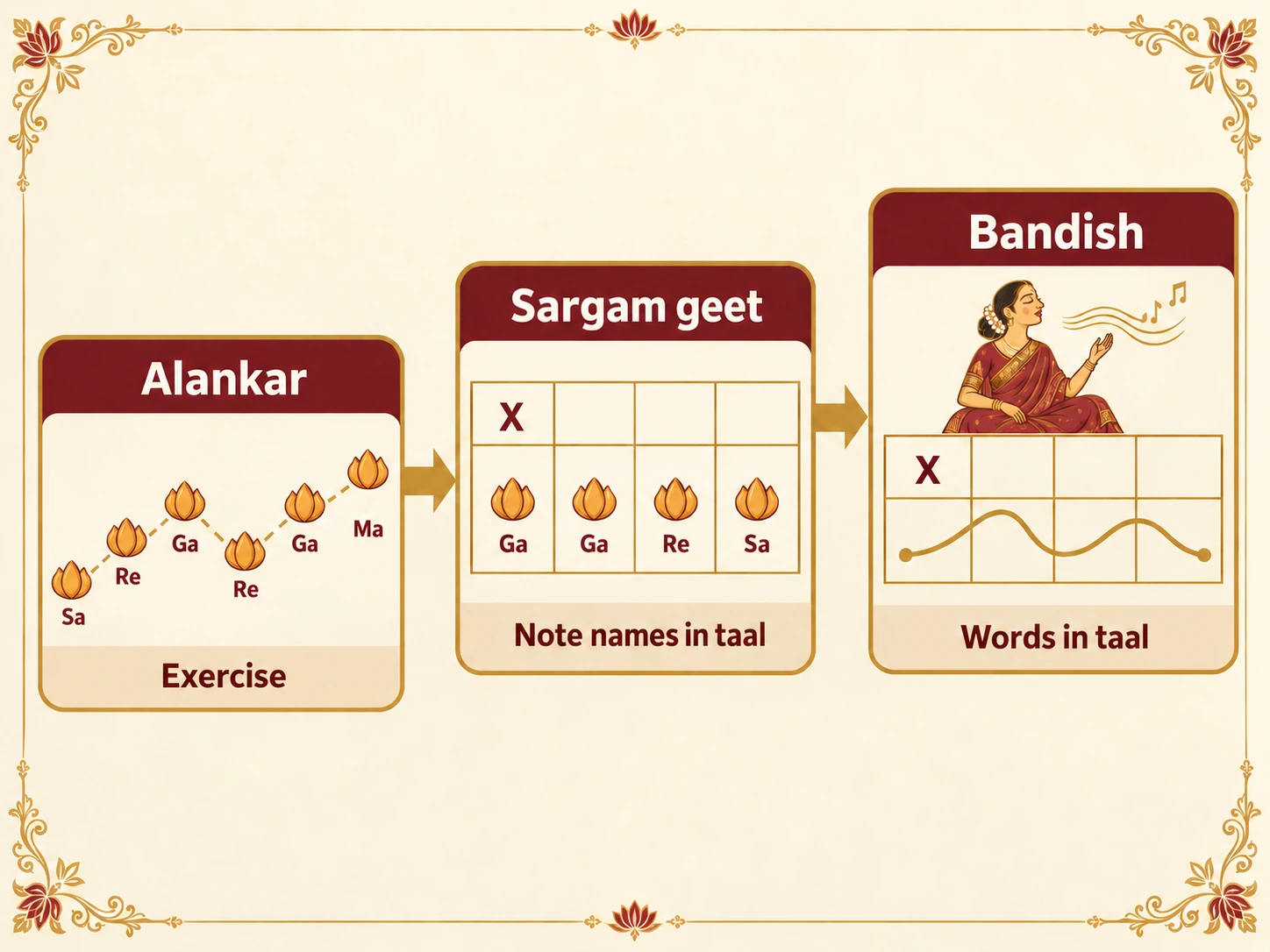
How it is structured
From level 2A sargam geet has a sthayi and an antara, set in a simple taal (usually Teentaal, sometimes Jhaptaal or Ektaal) in madhya laya. The sthayi stays mostly in madhya saptak; the antara climbs to taar Sa and returns. The melody follows the raga strictly and dwells on its vadi and samvadi.
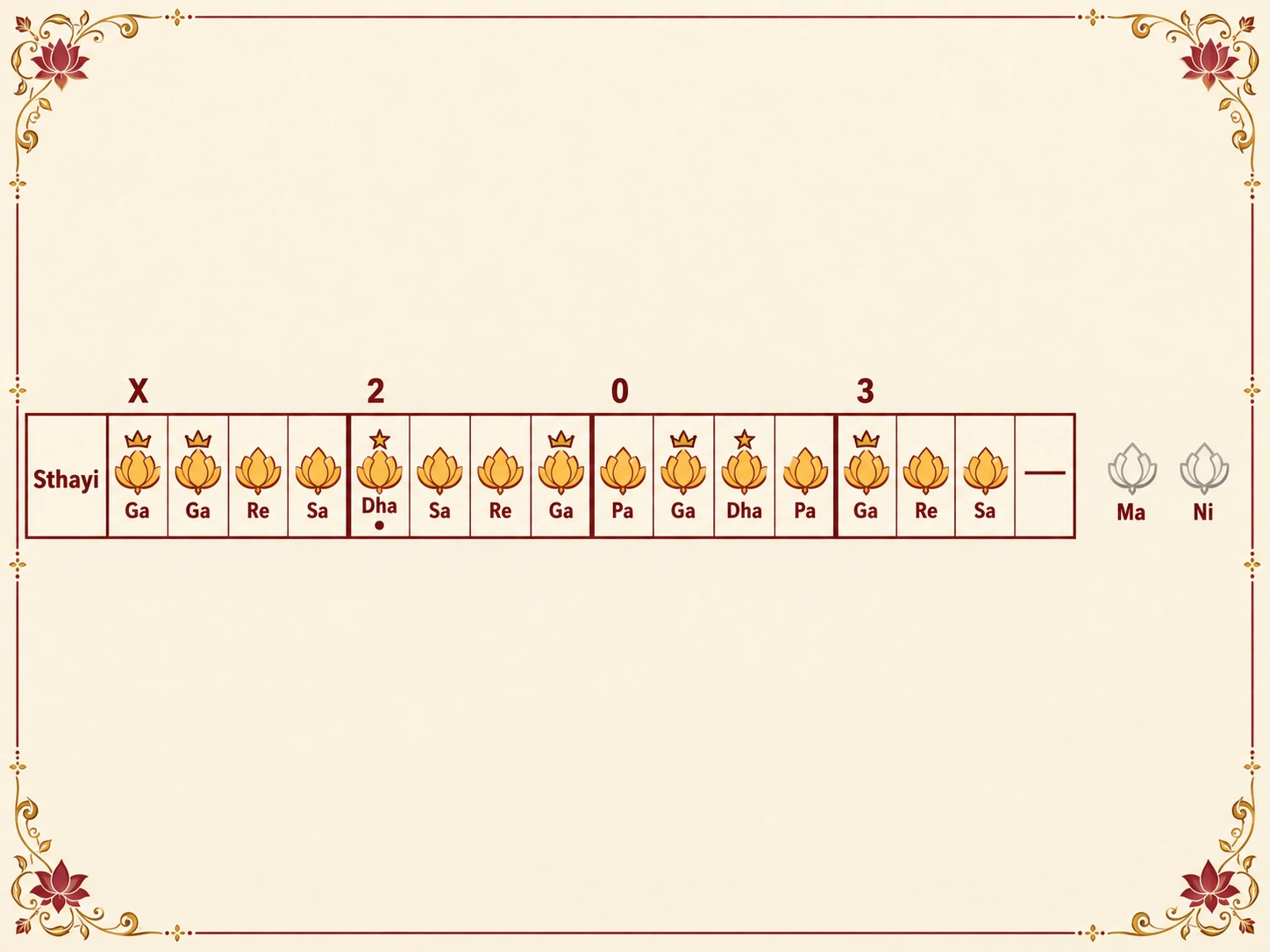
Here is an illustration in Bhupali, Teentaal (made up to show the shape, not a traditional composition):
| X | 2 | 0 | 3 | |
|---|---|---|---|---|
| Sthayi | ग ग रे सा | ध़ सा रे ग | प ग ध प | ग रे सा ऽ |
| Antara | प ग प ध | सां ऽ सां ऽ | ध सां रें सां | ध प ग रे |
Notice: no म or नि anywhere, Ga (the vadi) lands on strong beats, and the antara reaches सां.
Sargam geet, sargam, tarana, lakshan geet
From level 3These are easy to mix up in an oral exam:
| Form | What is sung | Fixed or improvised |
|---|---|---|
| Sargam geet | swara names | a fixed composition |
| Sargam (in a khayal) | swara names | improvised during the performance |
| Tarana | meaningless syllables (ta, na, dere) | a fixed composition, with improvisation |
| Lakshan geet | words describing the raga's rules | a fixed composition |
How to practise it, and what the examiner listens for
From level 2Practise
- Sing it slowly with a tanpura, checking that every name matches its pitch: when you say ग, you must sing Ga.
- Clap the taal and keep each vibhag in place.
- Once it is secure, sing it in aakar (on "aa") to hear the melody without the names.
The examiner listens for
- accurate swaras (a wrong note is obvious, because you are naming it);
- steady laya and correct taal claps;
- the raga's character: the sargam geet should sound like the raga, not just a scale.
At Madhyama Dwitiya you may be asked to read and sing a rhythmic sargam geet from notation, with half and quarter matras. At Visharad Dwitiya you are expected to compose new sargams in a raga yourself.
Exam questions
Answer these the way the examiner expects: short and exact.
What is a swarmalika? Level 2
Another name for a sargam geet: a taal-bound composition whose words are the swara names.
Why is a sargam geet usually taught first in a new raga? Level 2
Singing the note names fixes the raga's notes, movement and pakad in the memory before words are added.
How does a sargam geet differ from a lakshan geet? Level 2
A sargam geet is sung in swara names; a lakshan geet has words that describe the raga's rules.
How does a sargam geet differ from the sargam sung in a khayal? Level 3
A sargam geet is a fixed composition; sargam in a khayal is improvised.
Related
Learning this with a teacher
These pages will take you a long way on theory. The singing needs a guru — live online classes, one level at a time, with exam preparation built in.