Swara
स्वर
In short
A musical sound that is pleasant and melodious is called a swara.
सुरीली और मधुर ध्वनि को स्वर कहते हैं।
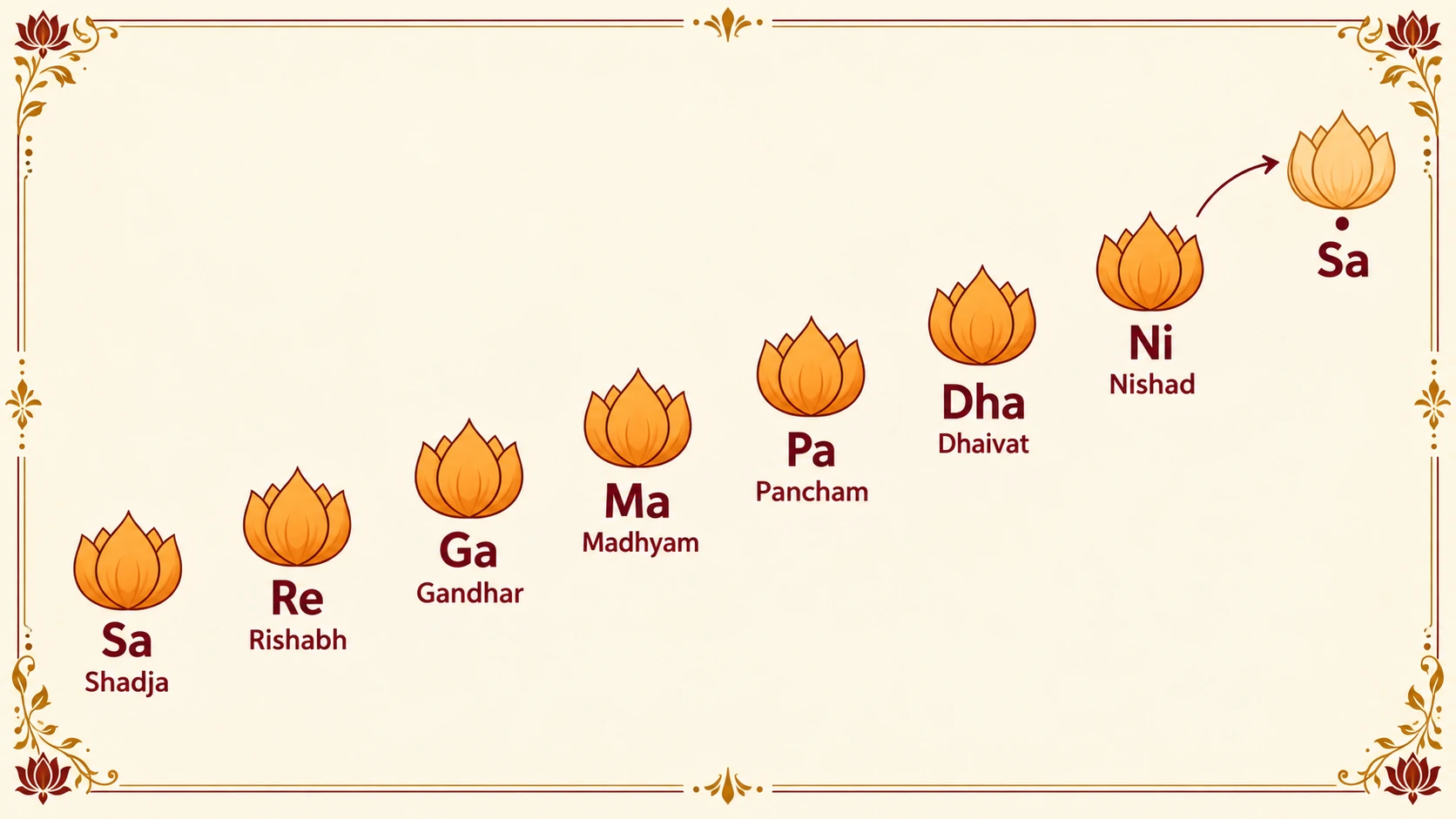
The seven swaras
From level 1Indian music is built on seven main notes, the sapta swara. Each has a full name and a short sargam name.
| Full name | Sargam | Written |
|---|---|---|
| Shadja (षड्ज) | Sa | सा |
| Rishabh (ऋषभ) | Re | रे |
| Gandhar (गांधार) | Ga | ग |
| Madhyam (मध्यम) | Ma | म |
| Pancham (पंचम) | Pa | प |
| Dhaivat (धैवत) | Dha | ध |
| Nishad (निषाद) | Ni | नि |
These seven, sung at their natural positions, are the shuddha swaras. Sung together they give the Bilawal thaat: सा रे ग म प ध नि सां.
Shuddha and vikrit, komal and tivra
From level 2A vikrit (altered) swara has moved away from its shuddha position. There are five:
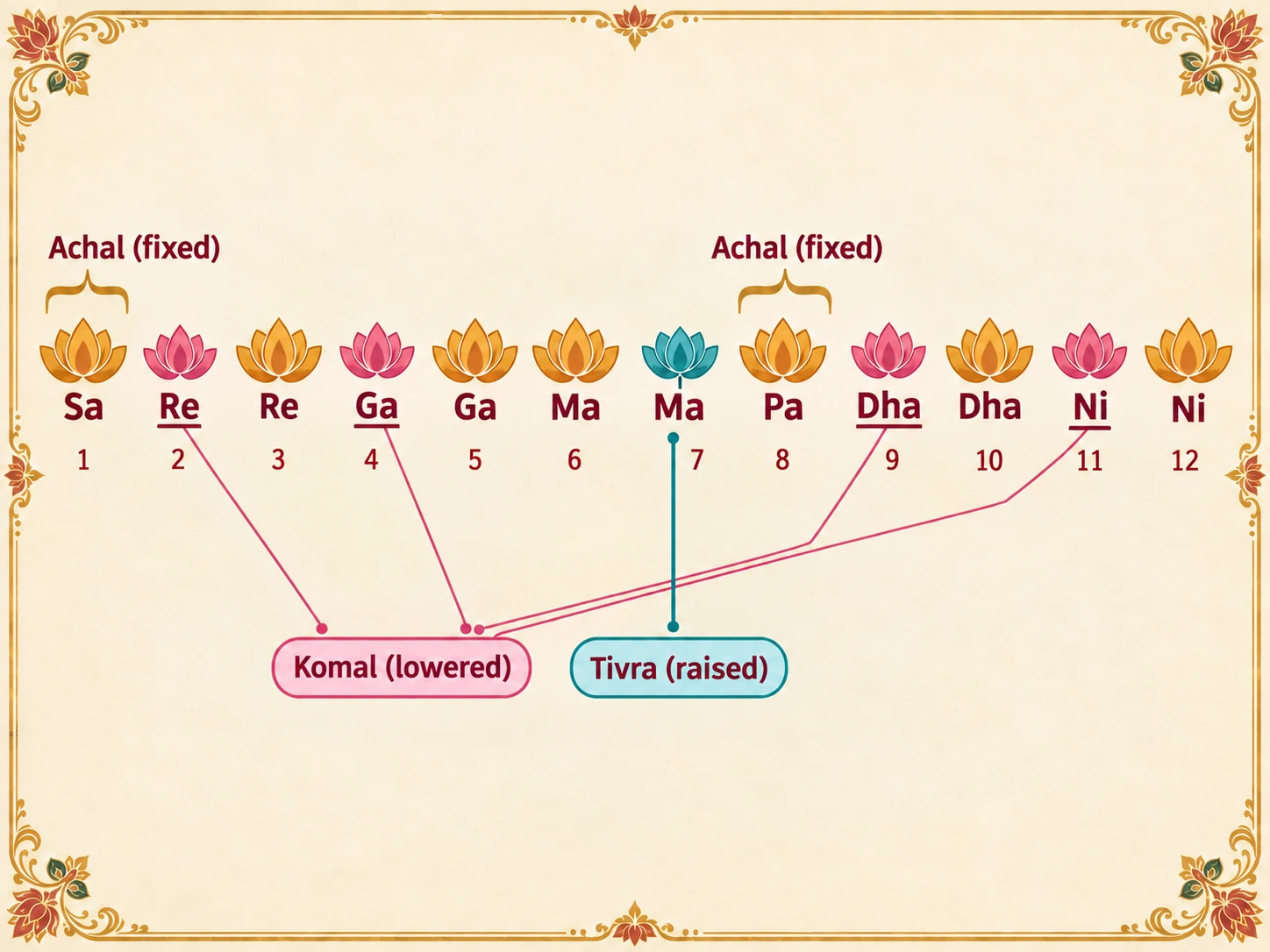
- Komal (कोमल, lowered): four notes can be komal: रे॒ ग॒ ध॒ नि॒. Mark: a line below the note.
- Tivra (तीव्र, raised): only one note can be tivra: म॑. Mark: a vertical line above the note.
Notice the pattern: Ma is the only note that goes up; Re, Ga, Dha and Ni only ever go down.
Chal and achal swaras
From level 2- Achal (अचल, immovable): सा and प never change. They have no komal or tivra form, which is why the tanpura is tuned to them.
- Chal (चल, movable): रे ग म ध नि can each take a vikrit form.
So of the seven notes, two are achal and five are chal.
Twelve swaras in one saptak
From level 27 shuddha + 5 vikrit = 12 swaras in every saptak. In rising order:
| 1 | 2 | 3 | 4 | 5 | 6 | 7 | 8 | 9 | 10 | 11 | 12 |
|---|---|---|---|---|---|---|---|---|---|---|---|
| सा | रे॒ | रे | ग॒ | ग | म | म॑ | प | ध॒ | ध | नि॒ | नि |
Each step in this row is the same small distance. Note that komal रे sits between सा and shuddha रे, and tivra म sits between shuddha म and प.
Riyaz: recognising swaras by ear
From level 3The level 3 practical asks you to sing and identify groups of four shuddha swaras, and groups of three where one or two are vikrit. The groups come from your syllabus ragas.
- Practise with the tanpura always on. Every swara is heard against सा; recognition is really recognising the distance from सा.
- Learn each vikrit note inside a raga you know: komal ग and नि through Kafi, tivra म through Yaman, komal नि in the descent of Khamaj.
- Have someone play three-note groups such as ग॒ म प or ध नि॒ सां while you sing them back and name them.
Exam questions
Answer these the way the examiner expects: short and exact.
What is a swara? Level 1
A musical sound that is pleasant and melodious.
Name the seven shuddha swaras with their full names. Level 1
Shadja (सा), Rishabh (रे), Gandhar (ग), Madhyam (म), Pancham (प), Dhaivat (ध), Nishad (नि).
How many vikrit swaras are there? Name them. Level 2
Five: komal रे, ग, ध, नि and tivra म.
Which swaras are achal? Level 2
सा and प. They have no komal or tivra form.
How many swaras are there in one saptak? Level 2
Twelve: 7 shuddha and 5 vikrit.
Related
Learning this with a teacher
These pages will take you a long way on theory. The singing needs a guru — live online classes, one level at a time, with exam preparation built in.