Saptak
सप्तक
In short
A group of seven consecutive notes, Sa to Ni. There are three: mandra (lower), madhya (middle) and taar (higher).
सा से नि तक सात क्रमिक स्वरों के समूह को सप्तक कहते हैं। तीन सप्तक होते हैं: मंद्र, मध्य और तार।
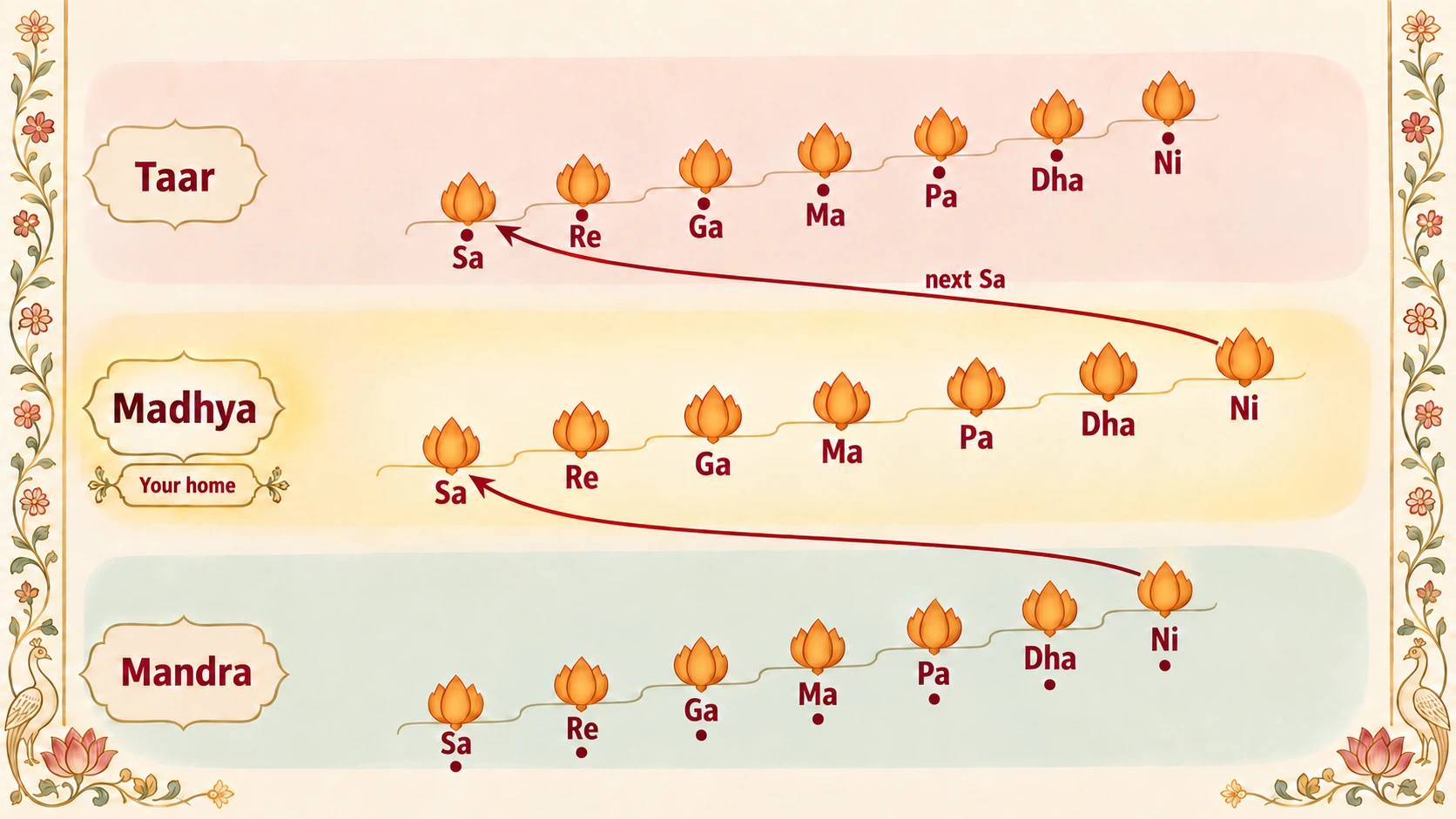
Seven notes, then the cycle repeats
From level 1Sing सा रे ग म प ध नि and keep going: the next note sounds like सा again, only higher. That return is why Indian music counts notes in groups of seven. Each group of seven is one saptak.
The note after नि is written सां (Sa with a dot above). It begins the next saptak up.
The three saptaks and their marks
From level 1| Saptak | Range | Mark in notation | Example |
|---|---|---|---|
| Mandra (lower) | below the singer's comfortable Sa | dot below the note | प़ ध़ ऩि |
| Madhya (middle) | the singer's natural speaking range | no mark | सा रे ग |
| Taar (upper) | above the middle octave | dot above the note | सां रें गं |
These marks are from the Bhatkhande notation the ABGMVM exams use.
Why the madhya saptak is your home
From level 2Your madhya Sa is set by your voice, not by a fixed pitch. Most riyaz and almost all of a bandish's sthayi lives in the madhya saptak. The antara usually climbs toward taar Sa, and alaap often begins by touching the mandra notes below Sa. A full raga presentation uses all three.
Exam questions
Answer these the way the examiner expects: short and exact.
What is a saptak? Level 1
A group of seven consecutive swaras from Sa to Ni.
Name the three saptaks. Level 1
Mandra (lower), madhya (middle) and taar (upper).
How is a taar saptak note written? Level 2
With a dot above it, for example सां.
Examined at
Related
Learning this with a teacher
These pages will take you a long way on theory. The singing needs a guru — live online classes, one level at a time, with exam preparation built in.