Lakshan Geet
लक्षण गीत
In short
A song whose words describe the raga it is sung in: its thaat, jati, forbidden notes, vadi, samvadi and time. You learn the raga's theory and its sound together.
ऐसा गीत जिसके शब्दों में उसी राग के लक्षण बताए जाते हैं: थाट, जाति, वर्ज्य स्वर, वादी, संवादी और गायन समय। राग का शास्त्र और स्वरूप साथ-साथ याद हो जाते हैं।
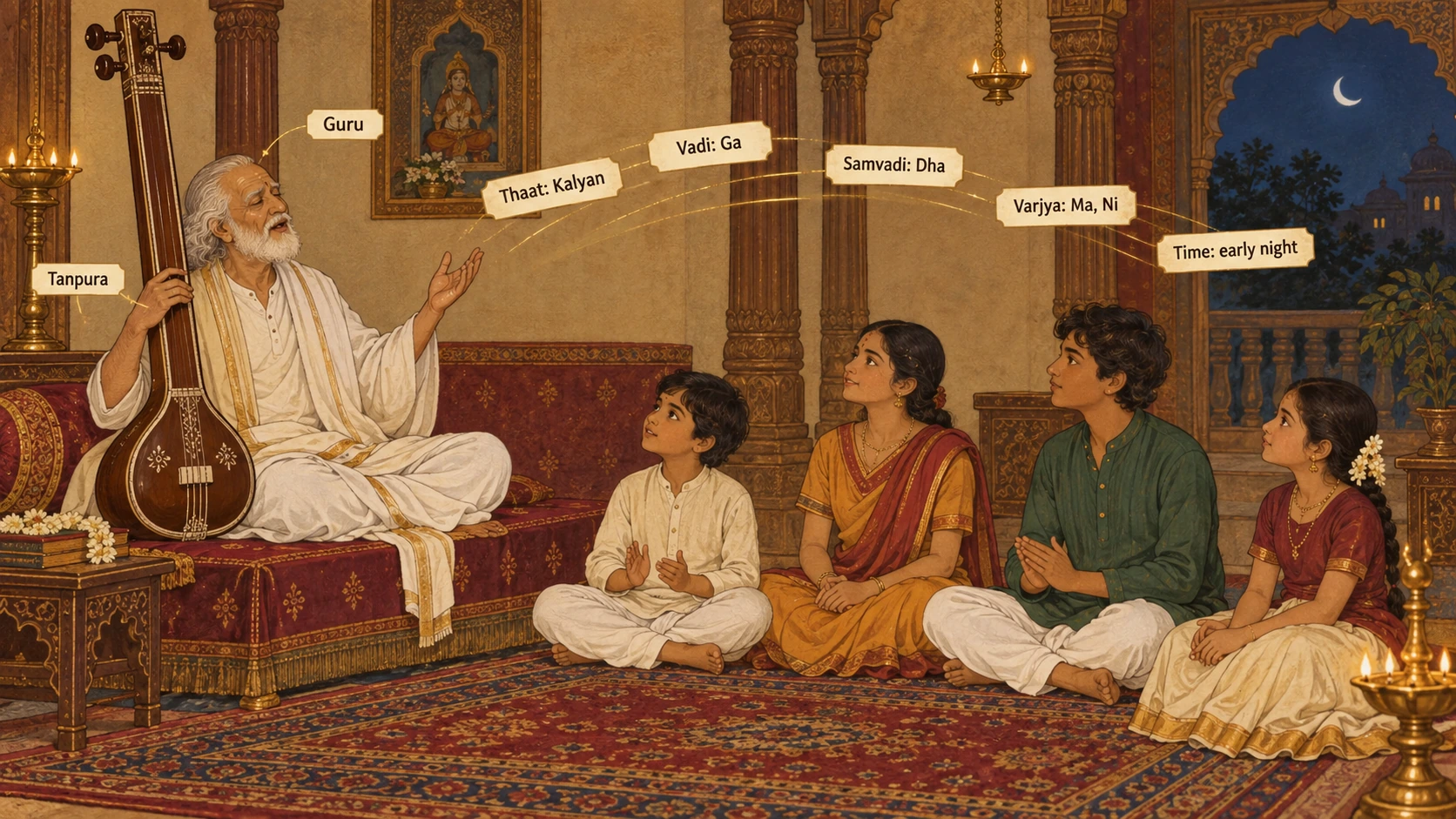
A song that teaches its own raga
From level 2A lakshan geet (लक्षण गीत, "song of characteristics") is a composition whose words state the rules of the raga it is sung in. The tune is in the raga; the text tells you what the raga is.
Pt. Vishnu Narayan Bhatkhande wrote many of them, under the pen name "Chatur", and printed them in his Kramik Pustak Malika alongside the swarmalikas and bandishes of each raga. Many of the lakshan geets taught in ABGMVM classes come from there.
How it is structured
From level 2Like a bandish, a lakshan geet has a sthayi and an antara, usually in madhya laya Teentaal or Jhaptaal. Between them the words carry the raga's facts:
| Fact | Bhupali |
|---|---|
| Thaat | Kalyan |
| Jati | audav-audav (five notes each way) |
| Varjya swaras | म, नि |
| Vadi / samvadi | ग / ध |
| Time | first quarter of the night |
| Sometimes also | aaroha-avaroha or pakad |
An illustration of how such words might run (not a traditional text):
कल्याण थाट की भूपाली, मध्यम निषाद वर्जित।
गंधार वादी, धैवत संवादी, गावत रैन प्रथम प्रहर।
Because the melody follows the raga's pakad and stresses the vadi, every line you sing demonstrates the very rule it states.
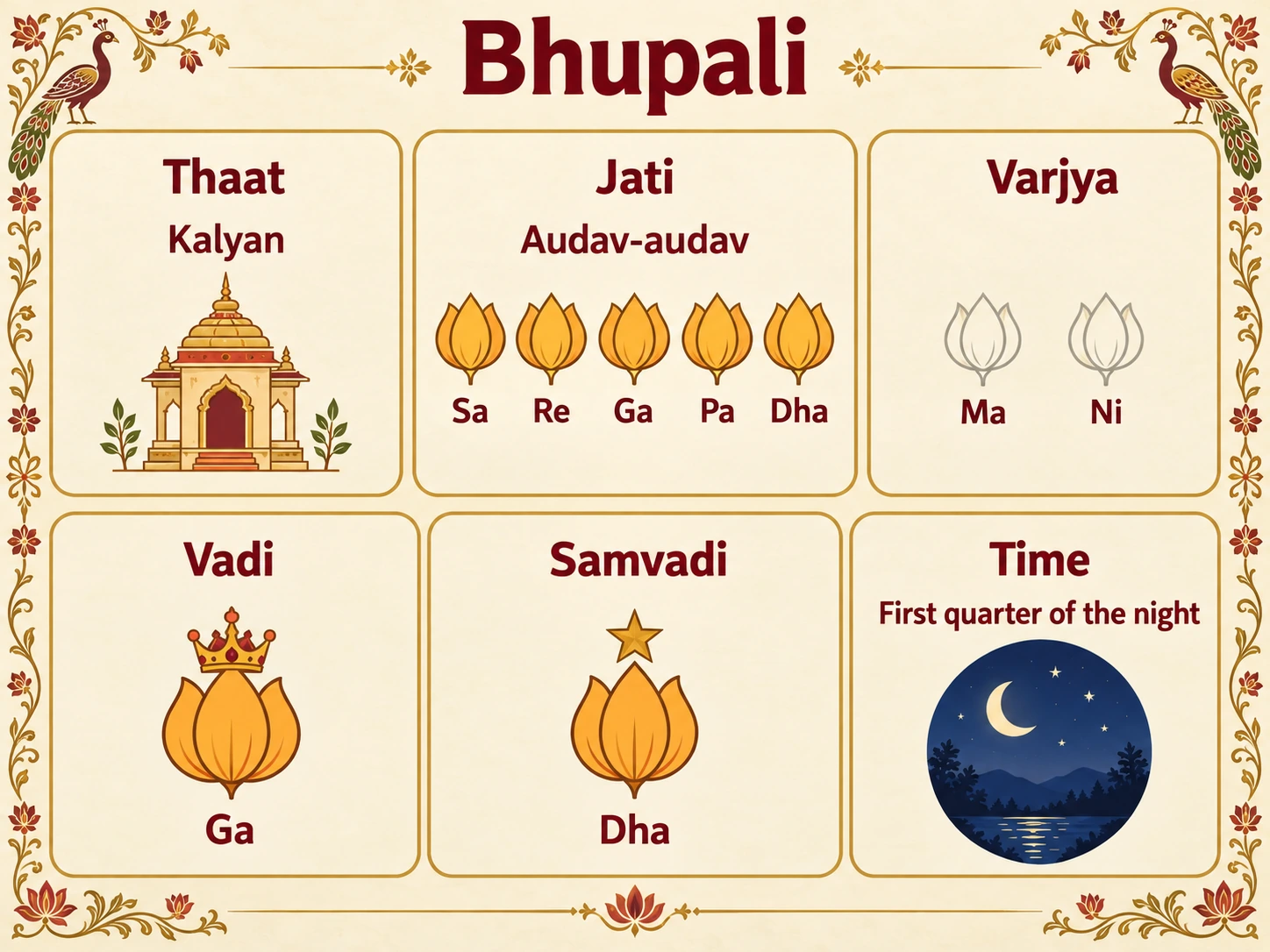
Why it helps you remember theory
From level 2In the oral exam you will be asked a raga's thaat, vadi, samvadi, jati and time. Facts learned as a list are easy to mix up between similar ragas; facts learned as a song come back in order, in the right raga, the moment you hum the first line.
It also links the rule to the sound. When the words say "Ga is vadi" while you are resting on Ga, you hear what a vadi actually does.
How to practise it, and what the examiner listens for
From level 2Practise
- Learn the words first and check each fact against the raga's details in your notes.
- Sing it with the taal, then without the words in sargam, to see how the tune uses the raga.
- After singing, say the facts aloud in plain prose. That is exactly what the oral exam asks.
The examiner listens for
- the composition sung correctly in the raga, in steady laya;
- words that are clear enough to understand;
- whether you can explain the facts the song states.
At Praveshika Pratham you learn two lakshan geets; at Praveshika Dwitiya one more, each form in a different raga.
Exam questions
Answer these the way the examiner expects: short and exact.
What is a lakshan geet? Level 2
A song whose words describe the rules of the raga it is sung in: thaat, jati, varjya swaras, vadi, samvadi and time.
What information does a lakshan geet usually contain? Level 2
The raga's thaat, jati, varjya swaras, vadi, samvadi and time, sometimes its aaroha-avaroha or pakad.
How is a lakshan geet different from a sargam geet? Level 2
A lakshan geet has words describing the raga's rules; a sargam geet is sung entirely in swara names.
Who wrote many of the lakshan geets taught today? Level 3
Pt. Vishnu Narayan Bhatkhande, under the pen name "Chatur".
Related
Learning this with a teacher
These pages will take you a long way on theory. The singing needs a guru — live online classes, one level at a time, with exam preparation built in.