Alaap
आलाप
In short
Alaap is the slow, note-by-note unfolding of a raga, expanding its phrases gradually.
राग के स्वरों का धीमी गति में, स्वर-स्वर बढ़ाते हुए किया गया विस्तार आलाप कहलाता है।
What alaap is
From level 2Alaap (आलाप, also written aalap; called swar vistar, स्वर विस्तार) is the slow exploration of a raga. The singer reveals the raga's notes one by one, dwelling on each, showing how the raga moves, where it rests and what mood it carries.
Alaap is unhurried. Notes are held, joined by meend, touched with kan. In a khayal it is sung either in akar (on "आ") or using the words of the bandish (bol-alaap), while the tabla keeps the taal running quietly underneath.
How a khayal alaap grows
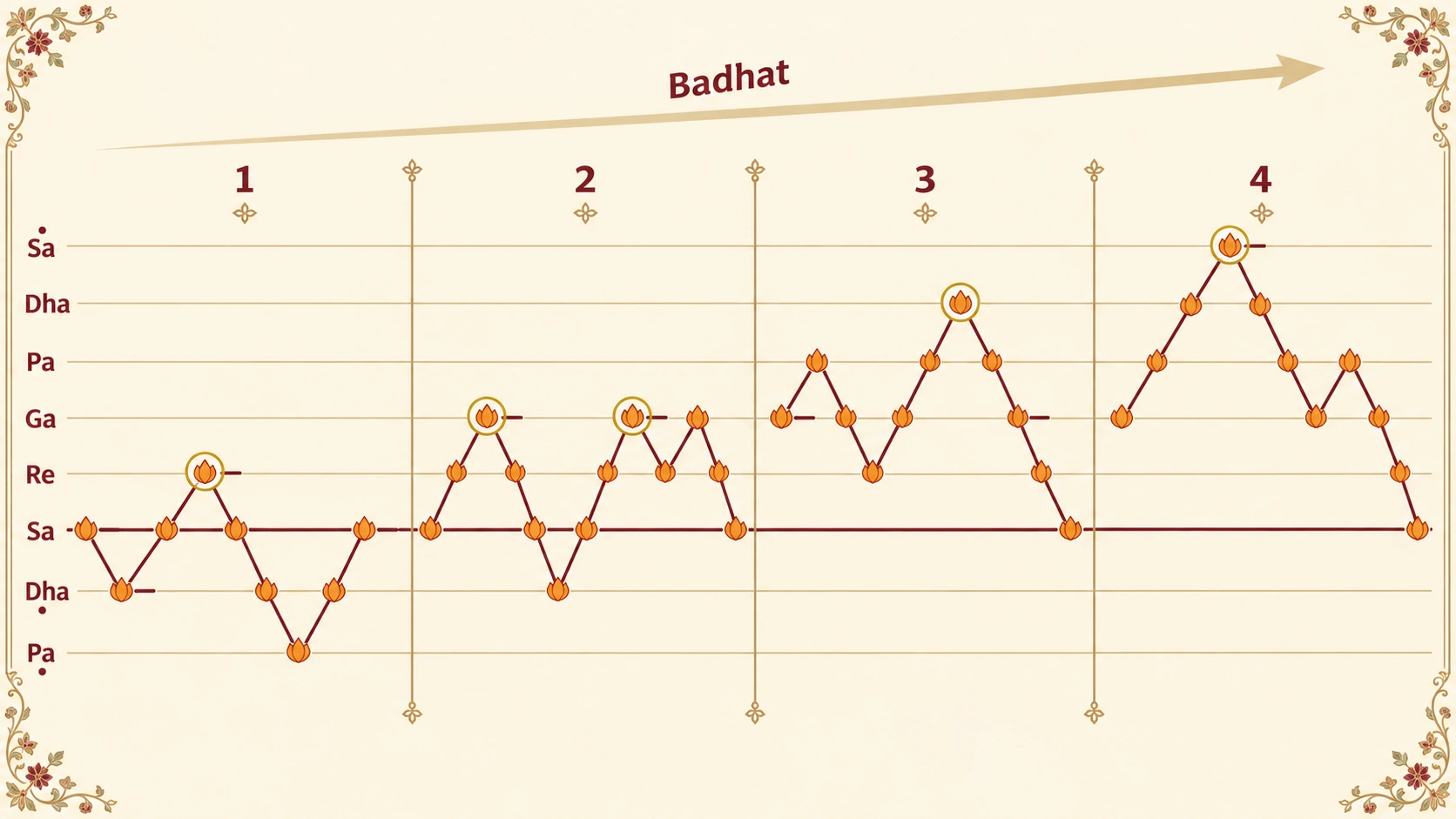
From level 2Good alaap expands step by step, a method called badhat (बढ़त). Begin around सा, touch the mandra notes, then add one new note at a time, always returning to rest. An introductory alaap in Bhupali might run:
- सा ऽ, ध़ ऽ सा ऽ, रे ऽ सा, ध़ प़ ध़ सा ऽ
- सा रे ग ऽ, रे सा, ध़ सा रे ग ऽ, रे ग रे सा
- ग ऽ प ग, रे ग, प ध प ग ऽ, रे सा
- ग प ध सां ऽ, ध प ग, प ग रे सा
(ऽ means hold the previous note.) Notice that each line reaches one note higher than the last and every phrase comes home. The level 3 practical asks you to identify a raga from sung alaap, so listen to your teacher's alaaps as carefully as you sing your own.
Nom-tom alaap
From level 3Before a dhrupad, the singer presents a long alaap not in akar but on syllables such as रे, ना, नोम, तोम, ता. This is nom-tom alaap. It begins slow and free, then gradually gains a steady pulse and speed. The later, rhythmic part is what most people mean by "nom-tom".
In khayal, alaap is shorter and usually sung within the bandish, between returns to the mukhda; in dhrupad, alaap comes first and can be the longest part of the performance.
Alaap and taan compared
From level 2| Alaap | Taan |
|---|---|
| slow | fast, usually dugun or chaugun of the bandish's laya |
| notes held and dwelt upon | notes in quick, unbroken runs |
| meend, kan and andolan prominent | clarity and evenness of each note prominent |
| shows the raga's mood and grammar | shows the singer's skill and brilliance |
| akar, bol-alaap or nom-tom | akar, sargam or bandish words (bol-taan) |
| comes first | follows alaap |
Both must stay within the raga. A taan that breaks the raga's rules is as wrong as an alaap that does.
Exam questions
Answer these the way the examiner expects: short and exact.
What is alaap? Level 2
The slow, note-by-note elaboration of a raga that shows its mood and movement. It is also called swar vistar.
What is nom-tom? Level 3
The style of alaap sung before a dhrupad on syllables like नोम, तोम, रे, ना; especially its later rhythmic part.
Give two differences between alaap and taan. Level 2
Alaap is slow and dwells on notes; taan is fast and runs through them. Alaap shows the raga's mood; taan shows skill and speed.
Learning this with a teacher
These pages will take you a long way on theory. The singing needs a guru — live online classes, one level at a time, with exam preparation built in.